Social Reflexion: Routing Knowledge in Organizations
From personal agent memory to a consent-first, organization-wide expertise signal.
What is Reflexion?
Reflexion is a pattern where an agent critiques its own work, summarizes what it learned, and stores those lessons externally (typically as embeddings in a vector database). On the next task, relevant reflections are retrieved into the context window to guide better decisions. In short: experience → lesson → memory → recall.
From Personal → Social Reflexion
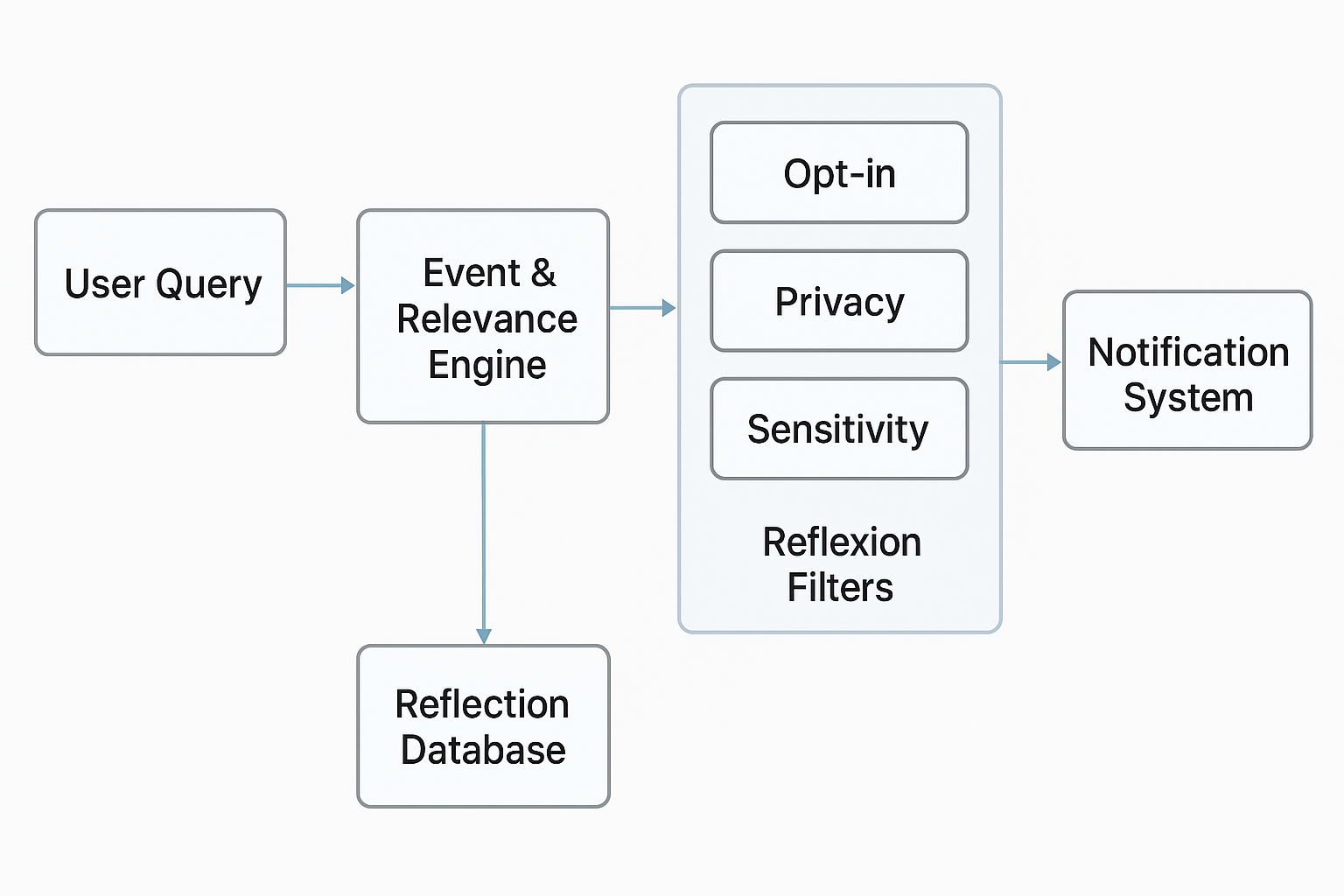
Social reflexion extends that loop from one agent to a network of people and agents. When a new question appears, the system searches prior reflections and routes the asker toward people who’ve worked on similar problems, along with the reflections themselves. It’s a who‑knows‑what signal built on reflection data.
┌───────────────────────┐      ┌───────────────────────────┐
│ User Query / New Task │ ───▶ │ Event & Relevance Engine  │
└───────────┬───────────┘      └───────────┬───────────────┘
            │                               │
            │ embeds + searches              │ similar reflections
            ▼                               ▼
      ┌──────────────────────┐        ┌────────────────────────┐
      │ Reflection Database  │        │ Reflexion Filters       │
      │ (embeddings+metadata)│        │ opt‑in • privacy •      │
      └───────────┬──────────┘        │ sensitivity             │
                  │                   └───────────┬────────────┘
                  ▼                               ▼
            ┌───────────────────────────────────────────┐
            │           Notification System              │
            │ (Slack, email, IDE hint, ticket comment)   │
            └───────────────────────────────────────────┘
A Practical Scenario
An engineer starts asking questions about a module that recently changed. The system finds reflections tied to those changes and notifies the relevant contributor: “You’ve worked on this—want to connect?” In large orgs this saves hours by preventing duplicate investigations and aligning context early.
Because this touches people and context, it must be delicate: avoid personal topics and let users opt out by topic or entirely.
Reflexion Filters: Consent and Safety
- Opt‑in: Reflections default to private; users choose team/org visibility.
- Privacy: Only match reflections a user has permission to see.
- Sensitivity: Filter topics like health, HR, or incidents unless explicitly allowed.
Implementation Sketch
- Add metadata to every reflection:
{author, project, tags, visibility}. - Store embeddings in a vector DB (Chroma/Milvus/BilberryDB) with that metadata.
- On each new query, search for similar reflections; exclude
visibility="private". - Trigger notifications (Slack/email/IDE) to the asker and relevant owners with links.
- Expose user settings for opt‑in and topic‑level sensitivity controls.
Bottom line: social reflexion turns reflection data into a routing fabric for expertise—faster answers, fewer duplicate threads, and safer collaboration through consent-first design.